Posts

Eighty years ago, war reaches deep into British pocket as the Fascist/Communist bromance moves onwards

Image
  The first wartime Budget by the Chancellor of the Exchequer Sir John Simon hammered home to the British people that they were facing the full horrors of war. The basic rate of income tax surged from 5/6 in the £ (27%) to 7/6 (37%). This was the most notable of an increase in practically every form of taxation, including death duties. There was dark talk of introducing a capital levy, hitherto unknown in Britain. The increases would bring in an extra £107m that year and £227m in a full year. Defence spending of £630m at the time of the last Budget in April had reached £730m in July before the war had even broken out. Britain was in for a lean time fiscally but Sir John could offer the public the consolation that at least the pound sterling retained its value on the international currency markets whilst the Reichsmark was worthless. What the British public was not told was that twenty German aircraft had bombed the Royal Navy ships at anchor in Scapa Flow in the Orkneys...
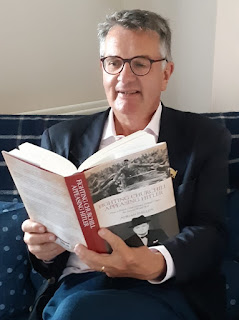
Printed copies of the new book have arrived!

Image
Just had my first sight of Fighting Churchill, Appeasing Hitler in its final state. Makes all the effort feel worthwhile and thanks to everyone who helped along the way. It's on sale on Tuesday 8th October.

Eighty years ago, Warsaw follows Guernica into the list of cities martyred by bombing

Image
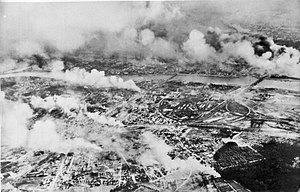
The Luftwaffe introduced Warsaw and the world to the full horrors of modern warfare. Under the command of Major Freiherr Wolfram von Richthofen it mounted the largest air raid yet on the Polish capital. 1,150 sorties dropped over 600 tonnes of bombs; tiny in comparison to the raids seen later in the war but terrifying nonetheless. The attackers – even including obsolete Ju52s – suffered negligible losses as the city was practically undefended. Von Richthofen was a cousin to the Great War flying aces of the same name; a telling register of how far air warfare had moved on from even the threadbare chivalry of its origins. The attack was intended to force the surrender of Warsaw but the city held out. Only intense direct shelling by the artillery of the Wehrmacht brought the siege to an end. Perhaps 20,000 civilians were killed. This was the end of the Polish campaign. The expansion of the war into the Balkans cam a step closer when the Rumanian premier, Armand Călinescu, wa...

Eighty years ago, German propaganda creates a legend whilst Stalin reaps the rewards of utmost cynicism

Image
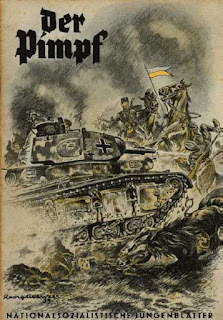
The Polish army launched a major counter-attack against the German invasion, which led to the largest and most bloody single battle of the Polish campaign, the Battle of Bzura. It saw the last full-scale use of cavalry as a battlefield arm, but, contrary to legend, the Polish cavalry performed effectively on the German flanks. The spurious image of horsemen charging tanks was an appealing one for German propagandists, keen to trumpet German superiority in all things. The thrust to the west of Warsaw did achieve some initial success but was quickly pushed back. The Poles lost some 20,000 men and the Germans 8,000. The Polish army fell back towards Warsaw, but the city was already practically surrounded. The undeclared war between Japan and the Soviet Union in the east, which had reached its most intense in the full-scale battle of Nomonhan on the Khalkin Gol came to an end with s signed cease-fire. The Soviet victory at Nomonhan had played some part in persuading Stalin to...