Posts

Eighty years ago: Chamberlain draws the road map to Munich, a committee wins the Battle of Britain* and Japans digs itself vigorously into a hole

Image
The new French government descended on London en masse with a long agenda of military and diplomatic questions, above all how to handle the burgeoning crisis over Czechoslovakia. It was a complete failure. Neville Chamberlain took a dislike to Daladier the French prime minister, whom he met for the first time, and was confirmed in his patronizing view of Georges Bonnet, the foreign minister. The French were desperate to secure some kind of open British commitment to the integrity of Czechoslovakia but Chamberlain was determined not to be tied in any way. In part he was simply faithful to the old British doctrine of avoiding Continental entanglements, in part he imagined that “keeping the Germans guessing” as to British intentions was somehow a powerful diplomatic strategy. He was also anxious to avoid doing anything that might provoke Hitler in any way. Chamberlain’s great “achievement” from the talks was to secure the principle that it was Britain’s task to broker a deal betwee...
Eighty years ago the Sudetenland emerges as the next flashpoint for a European crisis, Neville Chamberlain returns some lost property and the airship era comes to an end

Image
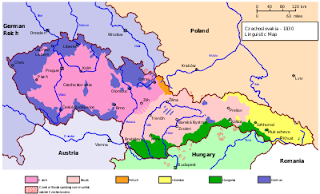
Konrad Henlein, the leader of the “Sudeten” German-speaking population of Czechoslovakia issued an extensive list of demands to the Czech government. It was immediately endorsed by Nazi Germany. The next flashpoint for a serious crisis in Europe was now abundantly clear. The presence of 3.5m German speakers in Czechoslovakia was an anomaly of the Versailles Treaty and few would have argued against the justice of improving their rights as a majority, but Henlein wanted full autonomy. More sinister, he wanted a right to “profess German nationality.” The Sudetenland had never been a political entity, it had always been part of Bohemian crown lands. The notion that Sudetens could be German citizens led logically to the incorporation of Sudetenland into Germany. Britain too was in process of tidying up one aspect of the greater mess of the legacy of 1914-1918 with the signature of a treaty with Eire. Britain was to give up control of the three naval bases in southern Ireland w...

Eighty years ago: Hollow diplomacy, rearmament phony and real, and an impostor eco-warrior with a real campaign

Image
Neville Chamberlain’s policy of constructive dialogue with the dictators (a.k.a. appeasement) produced its first demonstrable result when a series of agreements known as the Easter accords were signed.   with Fascist Italy was signed after months of negotiation. They amounted to little more than an agreement to maintain the status quo in the Mediterranean and the Near East. Italy committed itself to withdrawing its “volunteers” from Spain with very little by way of specific detail. The accords would not come into force until the volunteers had been withdrawn. There was no mention of the great prize for Italy: British recognition of its conquest of Ethiopia. The accords were trumpeted as the start of a new era in Anglo-Italian amity but they fell well short of detaching Mussolini from friendship with Hitler, the goal that lay behind Chamberlain’s policy. Italy had already accepted without protest the Anschlu ß of Austria to Germany which had occurred during the negotiations....