Posts

Eighty years ago, Britain and France stumble towards folly in Scandinavia as whimsical spy-mania provides a distraction from the phoniness of the war

Image
The British Ministry of Information launched one of the best known home front propaganda campaigns of the war. The posters advising the public that “Careless talk costs lives” were drawn by Cyril Bird (“Fougasse”) one of the best known illustrators of the day. The result was charmingly inconsequential with the whimsical notion that the higher leaders of the Third Reich might actually be stalking the land. It is unknown whether the campaign led to any reduction in gossip, but it aptly reflected the spy mania of period and the government’s mania for secrecy. (The contents of propaganda leaflets dropped in their tens of thousands on Germany was treated as highly confidential and not even disclosed to Parliament). In the absence of much real combat against the Germans, fighting phantom spies served as a distraction from the mundane reality of the Phony War.  Another reminder of the gentle pace of the Phony War came in the news that a German aircraft had been shot own on ...
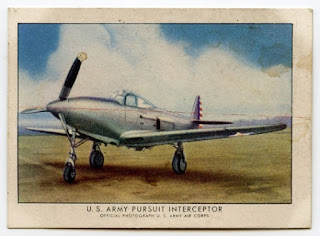
Eighty years ago, South Africa shows its doubts about fighting against Hitler and Labour mines a seam of government weakness, unaware of the hidden gold at the bottom

Image
At the time of the Sudeten crisis in September 1938 the British Dominions had been deeply concerned that Britain would be drawn into war with Germany. None more so than South Africa, where the Prime Minister, General Hertzog, had advocated neutrality in the event of war. Admittedly he did not go remotely as far as his openly pro-Nazi Cabinet and party colleague Oswald Pirow, who wanted South Africa to fight as Hitler’s ally. Hertzog continued to advocate neutrality in 1939, even as Britain did go to war and he was forced out of office. His position hardened and he tabled a motion calling for the war to be brought to an end, implying that as Germany had been “martyred” by the Versailles Treaty this should be on favourable terms. He found no fault in Hitler. The motion was defeated by 81 to 59, suggesting that South africa was very from supporting whole-heartedly the British Empire's fight against Hitler. Herbert Morrison, one of the leading lights in the British Labour...

Eighty years ago, Britain confronts the threat of Unity Mitford and chemical attack on bare, Highland legs

Image
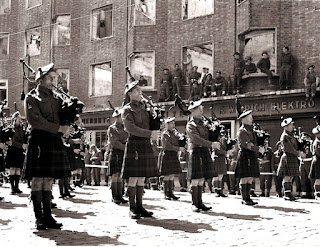
The British government finally reacted to the huge surge in road deaths caused by the remorselessly enforced black-out. In the first four months of the war 2,657 pedestrians had died as a result of road accidents-an increase of 117% over the previous year. It was announced in the House of commons that the speed limit in built-up areas was being cut to 20mph from 30mph. Fortunately for the government no-one raised the embarrassing fact that there had been negligible Luftwaffe activity over mainland Britain even by daytime and certainly not by night. The same session of the House was confronted with further proof of the gravity of the war situation. So as to save precious resources (money) soldiers in the Scottish Highland regiments of the army were no longer to be issued with kilts. The current inventory was to be withheld so that kilts would be available for ceremonial purposes once peace returned. The reason given publicly that this was in connection with the risk of g...