Posts

Fears Of Anschluss Not False, Just Premature
Image
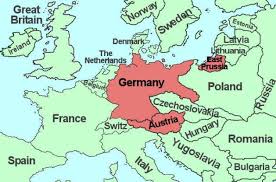
Thursday 30th April 1936 The German press worked itself into a lather of fury over stories in the British press over the last few weeks reporting German supposed German troop movements on the frontier with Austria. After the remilitarization of the Rhineland, the next provision of the Versailles Treaty that was likely to be broken was the ban on unifying Germany and Austria. The feeble response to the Rhineland move suggested that there would be little serious opposition. It was yet another direction from the peace of Europe might be threatened. The German newspapers blamed the reports on French attempts to antagonize other countries, in practice Italy, which might be hostile to so powerful a new neighbour on its border.  France certainly hoped that tension over the issue might keep Italy and Germany apart. Whilst denying the substance of the reports, the German press argued vehemently for the right of the Austrians to make their own decision. In fact the ...

Australia Told: Stick To Your Own Mice

Image
Wednesday 29th April 1936 The Walt Disney empire was already showing signs of the ferocity with which it defends its intellectual property. Radio Corporation Pty, an Australian maker of radio sets had sold them under the name of  Mickey Mouse  and Disney was fighting back through the Federal Trade Commission. Radio Corporation defended itself with the rather suspect claim that Disney had rights only to the image of Mickey Mouse and not the name alone. Disney argued that Mickey was so well known as to be "almost a living personality" as proof of which he even received fan mail. Disney went on to win and the case became a corner-stone in Australian copyright law.

The King Wants Money For A Hypothetical Queen

Image
Tuesday 28th April 1936 The Parliamentary Select Committee published its report on the Civil List, the public funding of the Royal Household. They had been confronted by an unusual request from the King and one that might have set alarm bells ringing. He had specifically asked that the Civil List made provision for a Queen. This was curious on two counts. No-one expected the King to marry in the near future and the normal practice was to allocate a sum to the Royal couple without specifying which spouse had what share. In practice £33,000 of the total grant to the last two Royal couples had been intended for the Queen and the report recommended that this provision should continue but should not be drawn until the King actually married.  With hindsight it is clear that the King wanted to reduce the Government's scope for making financial difficulties if he carried through his secret plan of marrying Mrs. Simpson.

Murky Affair Of The Emperor's New Plane

Image
Monday 27th April 1936 Free booting French aviator René Trouillet landed at a military airfield near Rome after a mysteriously easy escape from Villacoublay in France where the plane he was flying had been impounded by the legal authorities. It was a modern and expensive Beechcraft Staggerwing that he had bought for Haile Selassie, Emperor of Abyssinia, with sacks of silver that the Negus had given him in Addis Ababa the previous year. Trouillet styled himself the Negus's aviation adviser. Even more mysteriously Trouillet was well-received in Italy, which was in the final throes of invading Abyssinia.  The suspicion grew that he had agreed with the Italians to take the Negus up for a test flight and deliver him into their hands, with the tacit approval of the French authorities, still keen not to alienate Mussolini and force him into Hitler's arms. In the event the invasion of Abyssinia moved too fast and Trouillet never returned there but he did keep po...

Big Swing To Left In French Elections

Image
Sunday 26th April 1936 The first round of the French legislative elections showed a powerful swing in favour of the left-wing Front Populaire . For the first time the French Communist Party had allied itself with the Socialists under Leon Blum and it looked as though the strategy was paying off. It came second in a large number of constituencies and was well-placed to win them provided that the Socialist candidate respected the agreemnt and stood down for the second round. With polls required in two-thirds of constituencies nothing would sure until the following week but crude arithmetic suggested that there would be a change of government. Economic problems and uncertain diplomacy had weakend the appeal of Prime Minister Sarraut and his pre-election broadcast declaring that old-fashioned liberalism was dead had not helped.

Lloyds Drawn Into Burgeoning Budget Scandal

Image
Saturday 25th April 1936 In the debate on Chamberlain's Budget of the previous Tuesday the complaints from Labour that his doubling in the duty on Empire tea penalized the less well-off were losing ground to the far more exciting possibility that an insider had made profitable use of the planned increase in income tax. There had been a surge in insurance policies taken out at Lloyds against an increase in income tax and this had started to attract attention in Parliament and elsewhere. The Committee of Lloyds was pursuing a messy rear-guard action. There were only estimates of how many such policies had been taken out and it would require several days to look into the matter. Of course, it would have been unacceptable to deal unfairly on inside information but the outrage was directed more against the possiblity that underwriters had lost money as a result. In another sign that something serious was brewing, Chamberlain put the word about that he had wanted to say somethi...

SS Claims Fair Deal For Heathens

Image
Friday 24th April 1936 The official newspaper of the Nazi SS Das Schwarze Korps published a despairing article pleading for traditional, pre-Christian German faith to be recognised. It was triggered by the difficulties encountered by the "German Faith Movement" supposedly established to promote such beliefs which had just lost its only significant leader Count zu Reventlow, who had become increasingly disillusioned with the movement's merely anti-Christian tendencies. Quite what this faith consisted of was left rather unclear beyond the assertion they could be found in the Eddas heroic poems. The old gods such as Wotan were dead and the sacrifice of an admittedly old white horse some years before had done more harm than good. Hitler had no desire to antagonize the established churches and the vague notions of German blood and soil that he peddled were perfectly adequate as a faith.